On the cusp of the Cascades and the Puget Sound, Seattle has long been a city of firsts—not only a pioneer in tech and music, but in its determined pursuit of future-forward thinking. The 1962 World’s Fair planted that promise in mid-century design, unveiling a city poised for what lay ahead. A needle-shaped tower redefined the skyline, a monorail hummed above downtown streets, and other initiatives embodied the fair’s central theme: life in the 21st century.
While some of its more ambitious visions for urban planning did not take root, others—like the Coliseum now reimagined as the net-zero-carbon-emissions by 2040 Climate Pledge Arena—proved that the future could be built upon what already stands.
Today, the city is embracing a robust shift to tomorrow’s focus through green initiatives. Ambitious rail projects aim to link the city over the next 20 years. The Bullitt Center in the city’s vibrant Capitol Hill neighborhood touts the first urban commercial office in the US to fully meet the most rigorous sustainable building standards in the world.
Now, the hotel scene is following suit.
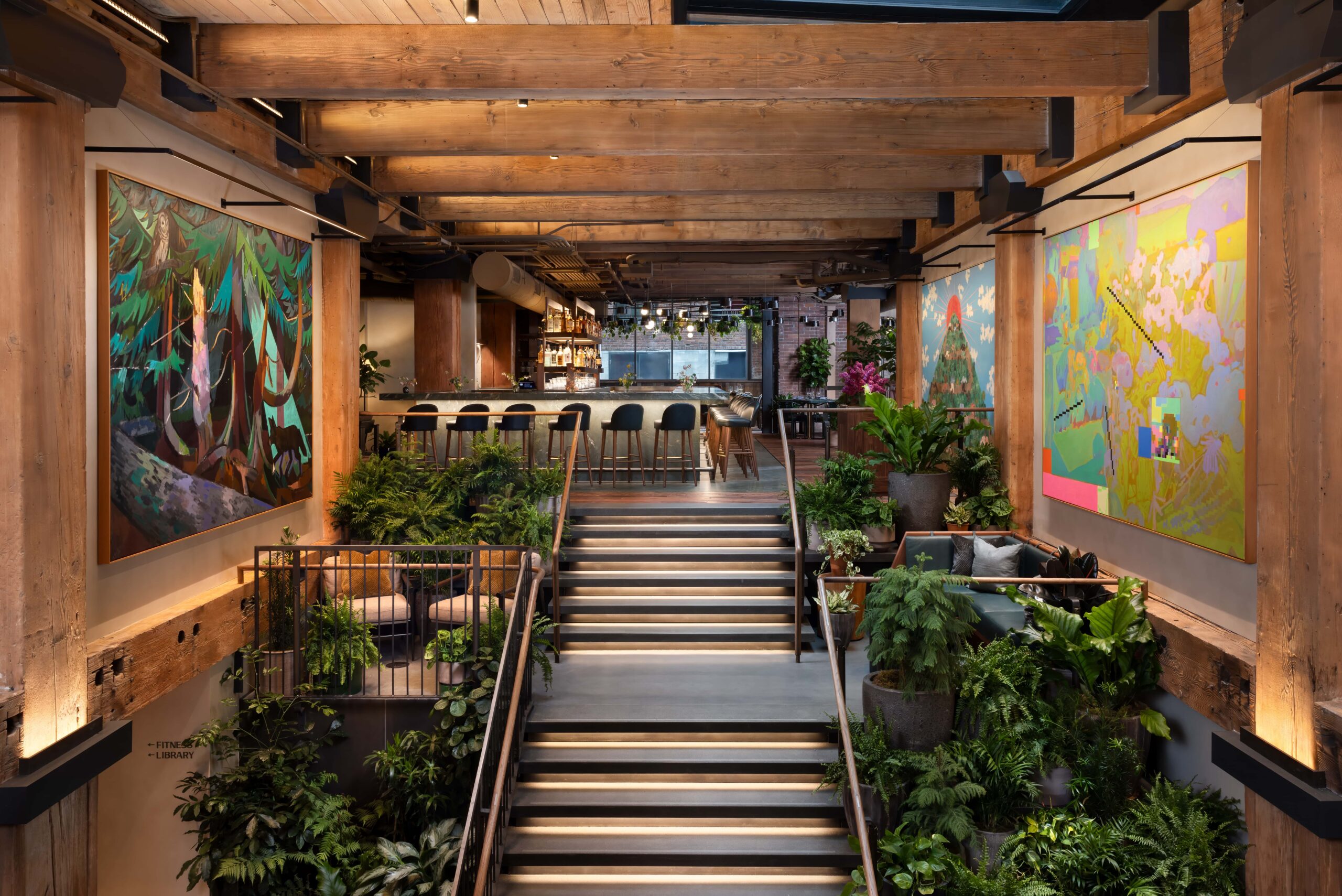
On the reimagined working docks and sawmill lots of South Lake Union—now a district of mirrored high-rises and tech campuses—the arrival of 1 Hotel marks a return to organic forms and materials. Amid glass towers and offices, the mission-driven luxury hospitality brand brings nature back into view: in local artist moss-lined walls, repurposed timber, filtered rainwater, and rooms that breathe. Notably, the hotel was built on the site of the former Pan Pacific Hotel, preserving the structure, conserving materials, and minimizing the embodied carbon cost of building from scratch.
It’s a philosophy shared by a new wave of developers: that sustainability starts not with what you build, but with what you choose to keep. Among them is Urban Villages, a developer-investor collective reimagining cities through human-centered design and stewardship.
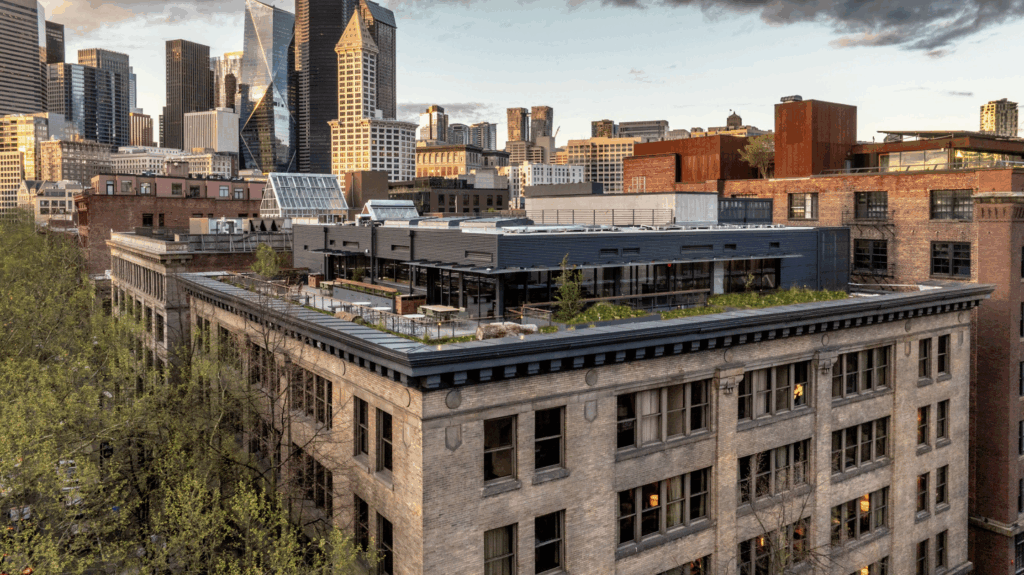
In Seattle’s Pioneer Square, this vision has taken root in the team’s Populus Seattle: a carbon-positive hotel shaped within the bones of the 1907 Westland building. Here, reclaimed materials, local art, and biophilic design form a dialogue between past and future.
“For hundreds of years, we have mined resources from our planet with little consideration for the vibrancy of life. We want to reverse the damage, and build communities that bring vibrancy back to our communities for the next hundred years.” — Urban Villages
Populus is situated within the Urban Villages RailSpur project, a micro-district comprising three historic warehouse buildings. Named for the tracks that once threaded the city’s edge, RailSpur unfolds across the brick-and-timber warehouses in Seattle’s first neighborhood. These buildings, once passageways between the Great Northern Railway and the working port, now form the bones of a new kind of corridor: one that is rooted in preservation as much as possibility, balancing office space, independent retail, restaurants, residences, and hospitality—designed not to erase the past, but to carry it forward.
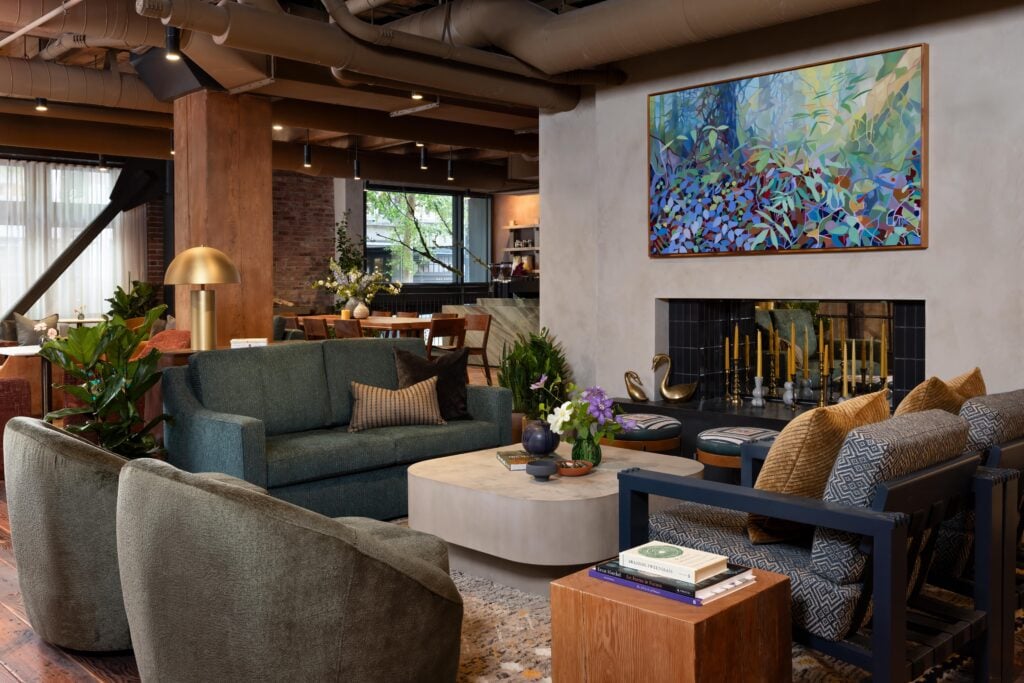
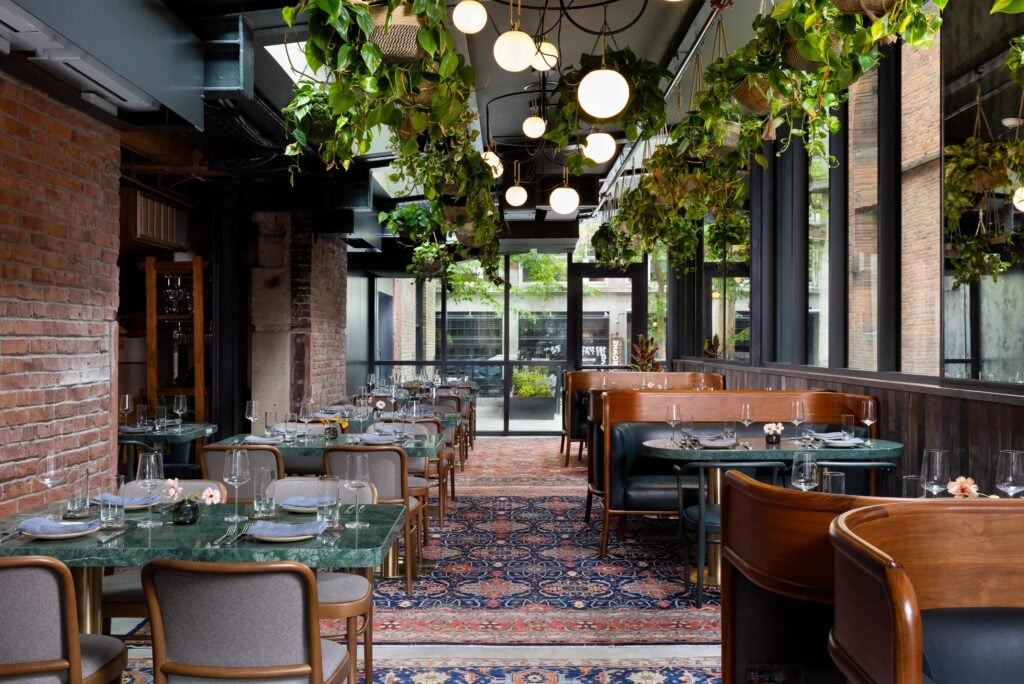
The Seattle project is the second, following the developer’s Populus Denver, offering a sensory experience of the Pacific Northwest. In this bountiful stretch between mountains and sea, flavors come into focus in two distinct dining concepts led by Chef de Cuisine Jonathan De Paz, a French Laundry alum: the rooftop bar Firn and PNW-driven Salt Harvest, both offering responsibly sourced and zero-waste dining.
Visual art engages the senses as well, with an impressive collection of 300 works by 35 local artists throughout the space.
As Seattle continues to reshape itself and its definition of future-forward neighborhood by neighborhood, Populus continues “the legacy of Pioneer Square as a hub of culture, connection, and community.”